Home › Road, Street, and Municipal Paving
Partner with a reliable contractor for road paving in Oklahoma City, OK. We construct and resurface neighborhood streets, municipal roads, and subdivision lanes using quality asphalt mixes. Our team manages milling, paving, and traffic control to deliver smooth, long lasting driving surfaces.
Precision Asphalt Oklahoma City provides professional road paving throughout Oklahoma City, OK, Oklahoma and the surrounding area. Our licensed, insured crew delivers safe, clean, on-time work with a free estimate before anything begins. Call (405) 696-4325 or request your free quote.
Road, Street, and Municipal Paving for Oklahoma City Communities
Precision Asphalt Oklahoma City provides road, street, and municipal paving that is planned around how people in Oklahoma City actually drive, walk, and live. Whether we are rebuilding a neighborhood street, widening a rural road on the edge of town, or resurfacing a busy commercial corridor, our focus is on long‑term durability and safety in local conditions.
We work directly with city departments, HOAs, school districts, business owners, and developers to design asphalt solutions that fit traffic levels, turning movements, and drainage patterns. From the first site walk to final striping, you deal with a crew that understands Oklahoma City soils, freeze‑thaw cycles, and the heavy trucks that use our streets every day.
Our team is familiar with local standards and common plan requirements in Oklahoma City, so we can coordinate with your engineer or design team and help catch potential constructability issues before work starts. The goal is always the same: a smoother, quieter, safer roadway that holds up to Oklahoma weather without constant patching.
How We Evaluate Your Road or Street Before Paving
Every successful road paving project in Oklahoma City starts with a careful evaluation of the existing conditions. At Precision Asphalt Oklahoma City we walk the length of the project, document distress types, and compare what we see with the traffic that uses the road.
We look for alligator cracking, rutting in wheel paths, base failures that feel soft under truck tires, and drainage problems such as water that sits along the curb after a storm. In older neighborhoods we pay special attention to transitions at driveways, ADA ramps, and manholes, since these areas often cause bumps and complaints if they are not planned correctly.
Based on what we find we recommend either full‑depth reconstruction, asphalt milling and overlay, or targeted full‑depth repairs combined with resurfacing. For example, a residential collector street in northwest Oklahoma City with scattered base failures might only need spot dig‑outs and a 2‑inch overlay, while a heavily rutted truck route serving distribution centers may require new base and thicker asphalt lifts. We explain these options in plain language so councils, boards, or property managers can make informed decisions.
Step‑by‑Step: Our Municipal and Street Paving Process
Once a plan is set, Precision Asphalt Oklahoma City follows a clear step‑by‑step process that keeps traffic moving and residents informed.
1) Traffic control and notifications. We coordinate lane closures and detours with the city or property manager, place signs and cones, and provide advance notice to residents and businesses. For schools and churches we often schedule work during breaks or off‑peak hours to reduce disruption.
2) Surface preparation. On resurfacing jobs we mill or grind off the top layer of asphalt to a specified depth, usually between 1 and 3 inches. This removes ruts and oxidation and gives the new asphalt a solid, textured surface to bond to. We also sweep the roadway clean so dust and debris do not interfere with adhesion.
3) Base repairs and strengthening. Where we encounter soft spots we cut out the failed asphalt and base, recompact the subgrade, and install new aggregate base. On roads that carry frequent semi trucks or trash trucks we may add additional base rock or geotextile fabric to keep ruts and depressions from coming back.
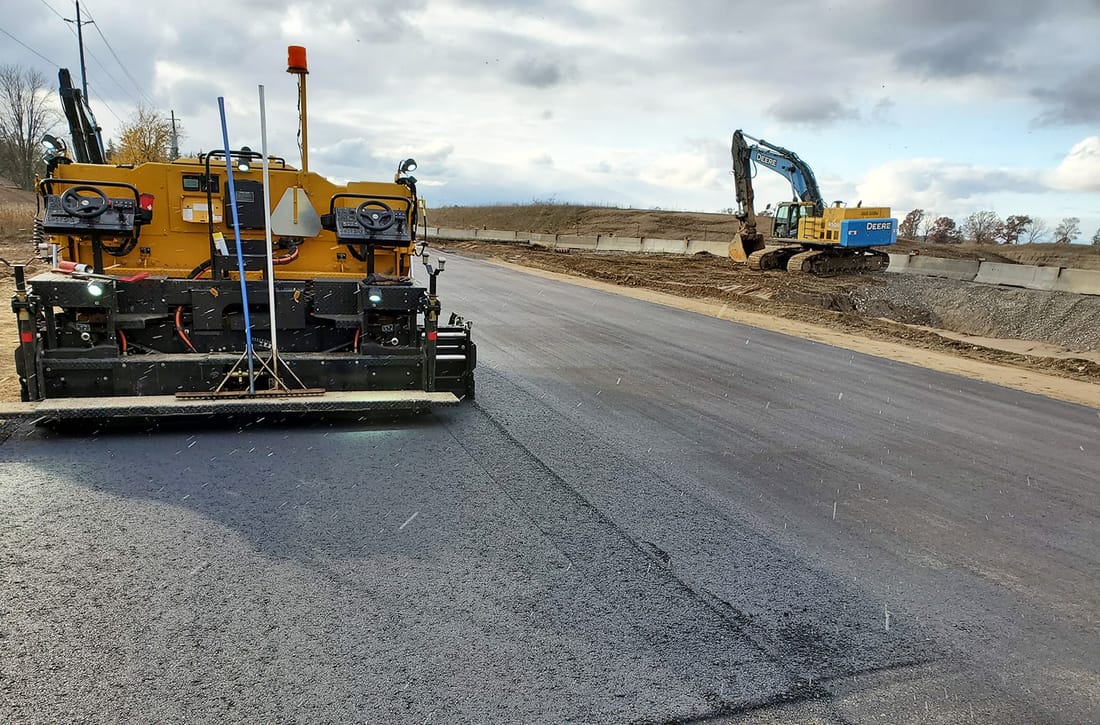
4) Asphalt paving and compaction. We use commercial pavers to place hot mix asphalt in uniform lifts, usually 2 to 3 inches at a time depending on design. Multiple steel drum and pneumatic tire rollers compact the mat to the specified density, which is critical for long life and resistance to water penetration.
5) Joints, transitions, and drainage. Our crews carefully tie the new pavement into existing streets, driveways, and concrete gutters so there are no abrupt bumps or trip hazards. We check drainage by eye and with levels while the asphalt is still warm, and adjust cross slopes or gutters to prevent ponding at low points.
6) Striping and signage. After proper cooling and, when needed, a curing period, we add lane markings, crosswalks, stop bars, school zone markings, and bike lanes as specified. Highly reflective paints and thermoplastic markings are used on higher speed roads to improve nighttime visibility.
Asphalt Mix Designs and Material Choices for Local Roads
Oklahoma City traffic and weather place specific demands on asphalt mixes. At Precision Asphalt Oklahoma City we work with local plants to select mixes that match the actual loading and environment of your project, instead of taking a one‑size‑fits‑all approach.
For neighborhood and subdivision streets we typically use a dense graded surface mix designed for passenger cars, school buses, and service vehicles. These mixes provide a smooth ride and resist raveling, which is common on older local streets. On arterials and industrial routes we may specify a heavier duty surface with a higher quality aggregate and different binder content to stand up to braking, turning, and heavy truck traffic.
When projects are funded with public money or must follow Oklahoma Department of Transportation or Oklahoma City specifications, we ensure the mix design meets the relevant standards for binder grade, air voids, and aggregate structure. For locations that see frequent fuel spills, such as near loading docks or in front of convenience stores, we can recommend design adjustments or protective treatments that help the pavement resist softening and early damage.
We also pay close attention to placement temperature and haul distance from the plant, especially in cooler months or during night work. Managing these details keeps the asphalt workable when it hits the ground, which leads to better compaction and fewer density‑related failures.
Cost Factors for Road Paving in Oklahoma City
Paving a public or private road is a significant investment, and understanding what drives cost helps you plan budgets and avoid surprises. Precision Asphalt Oklahoma City prepares itemized proposals that break down the major components so decision makers can see where the dollars go.
Key cost drivers include project size and length, the thickness and number of asphalt lifts, the depth of milling, and how much base repair is required. A long straight segment of road with minimal base work and simple traffic control will cost less per foot than a shorter project that needs extensive patching, phasing, and complex detours.
Access and phasing also affect pricing. If traffic must be maintained at all times, we may need to pave in narrow segments or at night, which increases labor and traffic control costs. In dense commercial areas along corridors like Meridian or May Avenue, coordinating work around business hours, deliveries, and school traffic often adds planning time but can reduce disruption.
Materials and fuel are another significant factor. Asphalt prices track oil markets, and hauling distance from the plant to your site impacts freight. We help owners and agencies time larger projects, when possible, to align with more favorable material pricing, and we can sometimes reduce haul costs by selecting the closest suitable plant.
Finally, project requirements such as testing, inspections, and documentation can influence cost. We are comfortable working under formal specification and testing programs and can recommend an approach that balances quality assurance with budget realities.
Common Roadway Problems in Oklahoma City and How We Address Them
Oklahoma City streets see wide temperature swings, intense summer sun, and occasional heavy storms. These conditions lead to a few recurring pavement problems that Precision Asphalt Oklahoma City is used to solving.
One frequent issue is base failure that shows up as alligator cracking or dips where heavy trucks stop and start, such as at intersections or near warehouse entrances. In these cases, simply overlaying the surface is not enough. We identify the failing areas, excavate to a stable depth, rebuild the base with compacted aggregate, and then pave, which prevents the same failure from reflecting back through the new surface.
Another common concern is poor drainage, especially along flatter residential streets where water stands at the curb after a rain. Standing water weakens the pavement and accelerates cracking and potholes. Our crews check gutter flow and inlet locations and can regrade the edge of pavement, adjust valley gutters, or in some cases add small valley inlets to move water off the road surface more quickly.
Older streets often have multiple overlays that have built up the surface over time, leaving high edges and trip hazards at driveways. We evaluate whether a new overlay can be feathered properly or if full milling is required to bring the entire corridor back to a consistent elevation. This can be critical for ADA compliance at crosswalks and ramps near schools, parks, and city buildings.
When utility work has left a patchwork of trenches and repairs, we can coordinate with utility providers and engineers to remove mismatched patches, repave to consistent grades, and restore ride quality. The goal is to provide a finished surface that feels like a single well built project instead of a collection of past repairs.
Working With Precision Asphalt Oklahoma City on Your Next Project
For city officials, facility managers, HOA boards, and private developers, communication is as important as the asphalt itself. Precision Asphalt Oklahoma City assigns a project lead who stays with your job from planning through final walkthrough, so questions get answered quickly and scheduling adjustments are handled in real time.
Before work starts we review the scope in detail, clarify staging, and identify sensitive locations such as school drop‑off lanes, bus stops, fire lanes, and key business access points. During construction we keep you informed of progress, weather impacts, and any field changes that might improve the end result or protect your budget.
Because we live and work in the Oklahoma City area, we treat every road and street as part of our own community. Our crews are used to working around local events, Friday night football games, and neighborhood activities, and we plan accordingly so residents and businesses are inconvenienced as little as possible.
If you are considering a road, street, or municipal paving project, we can provide site visits, condition assessments, and budget‑level estimates to help with planning. When you are ready to move forward, we deliver detailed proposals and realistic schedules, then build the project with the level of care you expect from a local contractor who intends to be here maintaining and improving Oklahoma City roads for the long term.