Home › Commercial Gravel-to-Asphalt Conversions
Upgrade messy gravel areas with commercial gravel to asphalt conversions in Oklahoma City, OK. We transform dirt and rock lots into clean, durable asphalt surfaces that impress customers and reduce maintenance. Our team handles grading, compaction, and paving for reliable long term performance.
Precision Asphalt Oklahoma City provides professional commercial gravel to asphalt throughout Oklahoma City, OK, Oklahoma and the surrounding area. Our licensed, insured crew delivers safe, clean, on-time work with a free estimate before anything begins. Call (405) 696-4325 or request your free quote.
Turn Your Gravel Lot Into a Reliable Asphalt Surface
If you are tired of mud, dust, and ruts in your commercial gravel lot, a commercial gravel to asphalt conversion can fix it for good. Precision Asphalt Oklahoma City specializes in taking existing gravel parking lots, drives, and service areas around Oklahoma City and turning them into smooth, marked asphalt surfaces that hold up to daily traffic.
Around Oklahoma City, we see the same issues on commercial gravel lots. In dry weather, dust coats cars and blows toward doors. When it rains, the low spots turn into standing water and mud, then rutting and washouts as vehicles drive through. Delivery trucks sink and spin, and customers do not know where to park. Converting to asphalt solves these problems and usually reduces long-term maintenance costs compared to constant grading and re-rocking.
On this page, we explain how the conversion process actually works, which options make sense for heavy trucks versus light car traffic, how our Oklahoma climate affects the design, and what typically drives the price so you can plan a realistic budget.
How Commercial Gravel-to-Asphalt Conversions Work
A proper conversion does not just mean spreading asphalt over existing rock. At Precision Asphalt Oklahoma City, we follow a step-by-step process so the new pavement stays solid and drains correctly.
1. Site evaluation and drainage review. We walk the property, mark utilities, and look at where water is currently going. In Oklahoma City, many gravel lots were never graded correctly, so water sits in wheel ruts or flows toward buildings. We shoot grades, check existing slopes, and decide whether we need to cut high spots, fill low spots, or add swales or drains.
2. Subgrade testing and repair. Gravel lots often hide soft spots, old fill, or organic material below the surface. We proof-roll the area with a loaded truck or roller. If the ground pumps or deflects, we undercut those areas, haul out bad soil, and replace it with compacted aggregate. On some clay-heavy sites on the south and east sides of Oklahoma City, we may add a geotextile fabric to separate the clay from the base rock so the base does not sink over time.
3. Building a stable base. A commercial asphalt surface is only as good as the base underneath. We typically shape and compact 4 to 8 inches of crushed aggregate over the existing gravel, depending on traffic and soil conditions. For lighter car parking, the existing gravel may be reused and regraded, then topped with additional base. For truck yards, we usually increase base thickness and use a tighter, angular rock that locks together under compaction.
4. Fine grading and compaction. We use graders and skid steers to establish final slopes, then compact the base with vibratory rollers until it meets density targets. This step is critical in our freeze-thaw cycles and during Oklahoma summer heat. A well-compacted base keeps asphalt from settling into waves and potholes.
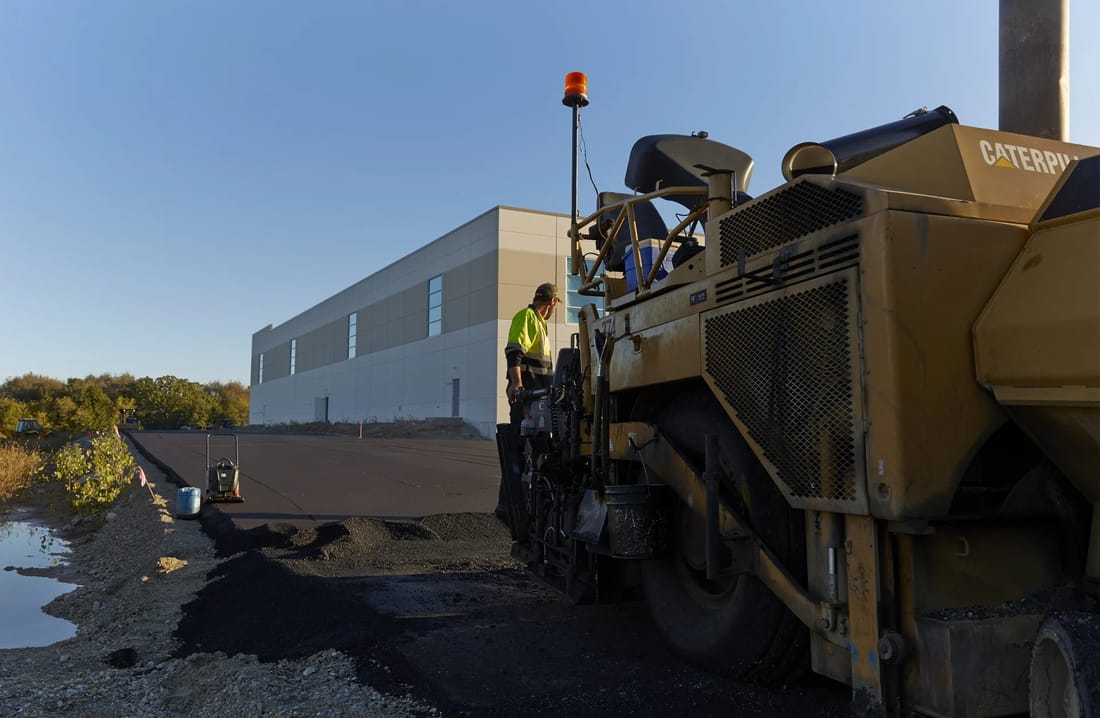
5. Asphalt paving. For most commercial gravel to asphalt conversions, we install a multi-layer system. A base course of asphalt is placed first, then a finer surface course on top. Total asphalt thickness usually ranges from 3 to 6 inches. High-traffic or heavy truck areas may get thicker sections or a different mix design with more stone and stiffer asphalt binder.
6. Finish work, striping, and access. After paving, we saw-cut clean edges where the new asphalt meets existing concrete or roads, seal transitions, then stripe parking stalls, ADA spaces, and traffic lanes. We can also add wheel stops, signage, and loading zone markings so the new lot works the way your business needs it to.
Design Choices for Oklahoma City Businesses
Not every commercial gravel to asphalt project is the same. Precision Asphalt Oklahoma City tailors the design to the kind of traffic you have, the layout of the property, and the way Oklahoma weather hits your site.
Traffic type. If your lot is mainly employee and customer parking, we can often use a standard commercial section with a moderate base thickness and a smoother surface course. For warehouse docks, trash truck routes, and delivery lanes, we may recommend thicker asphalt, a stronger base, or even reinforcing the heaviest traffic lanes while keeping the rest more economical.
Drainage and slope. Oklahoma City gets intense rain events followed by hot dry stretches. Poorly designed lots collect water, which weakens the base and causes potholes. During design, we look for practical ways to move water away from building entrances and toward existing drainage points. Sometimes that means adjusting driveway elevations, adding a small valley gutter, or tying into an existing storm inlet.
Access and phasing. For active businesses, shutting everything down is not realistic. We often phase the work so part of the lot stays open. That might involve paving in sections over a few days or working around delivery windows. We plan equipment access so trucks are not blocking your doors during business hours.
Surface features. A conversion is a good time to improve how your site works. Many owners in Oklahoma City use the project to add clearer parking striping, angled stalls for easier flow, dedicated truck-only routes, or properly marked fire lanes. If you have ADA parking that currently sits in a rutted gravel area, we can design a compliant section with the right slopes, access aisles, and signage.
Future maintenance. We also talk about what maintenance plan makes sense for your traffic level and budget. That may include sealcoating cycles, crack sealing to keep water out of the base, and periodic restriping so traffic patterns stay clear.
What Drives Cost and Common Problems We Fix
Many owners start with the same question: what will this cost per square foot? With commercial gravel to asphalt projects, the total price depends on a few key factors that we can walk through on site.
Base and subgrade condition. If your existing gravel is thick, stable, and drains reasonably well, we can often reuse much of it and keep base work modest. If the lot has deep ruts, holds water, or was built over fill dirt or construction debris, we may need to undercut and rebuild sections. That can be the largest variable in cost, but it is also the part that prevents expensive failures later.
Required thickness and traffic. A light-use office parking lot might not need the same pavement structure as a truck-heavy freight yard near I-40. Thicker base and asphalt layers cost more up front but are cheaper than rebuilding failed pavement under constant truck traffic. We factor in axle loads, turning areas, and braking zones to put strength where it is actually needed.
Drainage corrections. Fixing long-standing drainage problems can add items like re-grading, swales, or new drains. In some Oklahoma City sites, a small amount of extra grading solves years of mud and standing water issues. We explain which drainage upgrades are optional and which are necessary to protect your investment.
Common problems we prevent or correct include soft spots that show through as dips, cracked edges where asphalt was placed on weak shoulders, and low entrances that funnel stormwater into your building. We handle these by reinforcing edges, extending the base beyond the pavement edge, and fine-tuning grades at entrances. Because we work almost exclusively in this region, we know which soils tend to move and which areas of a lot are most likely to fail first.
Our goal at Precision Asphalt Oklahoma City is to explain the tradeoffs clearly, not just hand you a number. Most commercial clients appreciate seeing a base bid with options, like a standard section and an upgraded heavy-duty section, so they can match the project to their budget and risk tolerance.
What to Expect When You Hire Precision Asphalt Oklahoma City
A successful gravel to asphalt conversion requires clear planning and communication so your business can keep operating. When you contact Precision Asphalt Oklahoma City, we start with a site visit, not just a quote from aerial photos. We measure, check drainage, ask about your busiest hours and truck patterns, and review any problem areas you want solved.
Scheduling and traffic control. We work with you to schedule the project around your operations. For example, an office may prefer evening or weekend work, while an industrial facility might want us to work during the day when fewer trucks are on site. We set up cones and signs, coordinate temporary parking areas, and keep clear paths open to key doors whenever possible.
Project timeline. A typical commercial gravel to asphalt conversion in Oklahoma City might take 2 to 5 days, depending on size and how much base work is needed. Base repair and grading usually take the first part of the schedule, with asphalt placement and striping at the end. We let you know when sections can reopen to foot traffic and when they are ready for cars and heavier vehicles.
Communication and adjustments. During the work, you will deal with a local project manager who is on site and reachable. If we uncover unexpected issues, like an unmarked utility line or a deeper soft area, we explain the options before moving forward. Our crews keep the site as orderly as construction allows, with cleanup at the end of each day.
After completion, we walk the lot with you, point out drainage flow, striping layout, and any areas that may need special care, like new entrances where drivers are turning sharply. We also provide basic care instructions, such as initial cure times for heavy truck traffic, when to consider first sealcoat, and what early signs of trouble to look for so small issues can be repaired before they grow.
If you are considering a commercial gravel to asphalt conversion anywhere in the Oklahoma City area, Precision Asphalt Oklahoma City can evaluate your lot, explain the real options, and give you a straightforward plan and price tailored to how your property is actually used.