Home › Asphalt Pathways, Sidewalks, and Trails
Build safe, accessible routes with asphalt pathway paving in Oklahoma City, OK. We install and resurface walkways, bike paths, and multi use trails for parks, schools, and campuses. Our paths feature smooth surfaces and gentle transitions that serve walkers, cyclists, and strollers.
Precision Asphalt Oklahoma City provides professional asphalt pathway paving throughout Oklahoma City, OK, Oklahoma and the surrounding area. Our licensed, insured crew delivers safe, clean, on-time work with a free estimate before anything begins. Call (405) 696-4325 or request your free quote.
Local Asphalt Pathway Paving in Oklahoma City
Asphalt pathways, sidewalks, and trails in Oklahoma City need to stand up to hot summers, sudden storms, and regular freeze-thaw cycles. Precision Asphalt Oklahoma City focuses on designs and construction methods that work for our specific climate and soil conditions, not just a one-size-fits-all approach.
We build asphalt walkways for neighborhoods, HOA common areas, city parks, school campuses, churches, medical facilities, and commercial sites across the metro. Whether you are connecting a parking lot to a front entrance, adding a loop trail around a retention pond, or replacing cracked concrete walks at a small business, we plan each project around how real people use the space every day.
Because many Oklahoma City properties were developed in phases over several decades, we often tie new asphalt paths into older concrete or asphalt surfaces. We pay close attention to transitions at curbs, ramps, and building thresholds so you do not end up with trip points or standing water at the seams. Our goal is simple, safe, smooth routes that hold up to heavy foot traffic, strollers, bikes, and carts.
How We Design Asphalt Pathways, Sidewalks, and Trails
A good asphalt pathway starts on paper. Our crew begins with a site visit where we walk the intended route, look at drainage patterns, and note any existing utilities, trees, and structures. In Oklahoma City it is common to deal with clay-based soils and gentle slopes around homes and commercial buildings, so we plan alignments that shed water and avoid low spots that turn into mud or ice.
We work with you to decide path width based on use. Residential garden walks and side yard connectors are usually 3 to 4 feet wide. School, park, and commercial sidewalks typically run 5 to 8 feet. Multi-use trails along greenbelts or around apartment complexes often fall in the 8 to 10 foot range so walkers and bikes can pass safely.
Surface options depend on how you expect people to use the path. For light residential foot traffic, a standard fine-graded asphalt mix provides a smooth walking surface. For areas with carts, maintenance vehicles, or heavy bike use, we specify a sturdier mix with more stone content and a thicker asphalt layer. Around playgrounds or senior living communities, we can adjust the gradation and finish to reduce trip hazards and make the surface friendlier for walkers and wheelchairs.
We also plan details like stopping points, crossings, and signage bases. For example, an apartment complex trail near NW Expressway might need defined crosswalks to parking islands and concrete pads where residents set trash carts on pickup days. These details are easier and less expensive to design into the original plan than to fix later.
Site Preparation and Base Work Matter Most
In Oklahoma City, the difference between an asphalt path that lasts 2 years and one that lasts 15 usually comes down to base preparation. Precision Asphalt Oklahoma City does not shortcut this step because our local clay soils can shift when they get wet or dry out.
First, we remove grass, organics, and soft material along the route, typically 6 to 10 inches below the proposed finished grade, more if trucks or maintenance vehicles will regularly use the path. We compact the native subgrade with a vibratory roller or plate compactor and proof roll to identify soft spots. Any pumping or deflection spots get undercut and replaced with more stable material.
Next, we install an aggregate base course, usually 3 to 6 inches of crushed rock, depending on the project requirements and soil conditions. Around Lake Hefner or the river corridor, where soils may be softer or wetter, we often recommend a thicker base or a geotextile fabric separator to keep the base rock from sinking into the subgrade over time.
The base is then graded to create a gentle crown or cross slope so water sheds off the path and into designated drainage areas. We aim for at least 1 to 2 percent slope where possible. Precise grading here helps prevent puddles that break down asphalt, especially after late summer thunderstorms or winter freeze-thaw cycles.
Asphalt Installation and Thickness Options
Once the base is set and compacted, we place the asphalt. For small residential pathways and tight backyard access, we may use small equipment and hand tools to place the mix so we can work around fences, landscaping, and structures. For longer walks and trails in neighborhoods like Edmond-adjacent developments or business parks near I-40, we often use a small paver to achieve consistent thickness and smoother finishes.
Typical asphalt thickness for light-use pedestrian paths is 2 to 2.5 inches compacted. For paths that will see service vehicles, golf carts, or regular bike and scooter traffic, we recommend 3 inches or more. On HOA or city park trails that need to carry utility carts and mowers, we may use a 2 inch surface course over a 1.5 to 2 inch binder course for added strength.
We compact the hot asphalt in multiple passes using a roller sized to the job. Proper compaction locks the aggregates together, reduces air voids, and significantly increases pathway life. Edges are carefully compacted and sealed so they do not unravel when exposed to weather or lawn equipment.
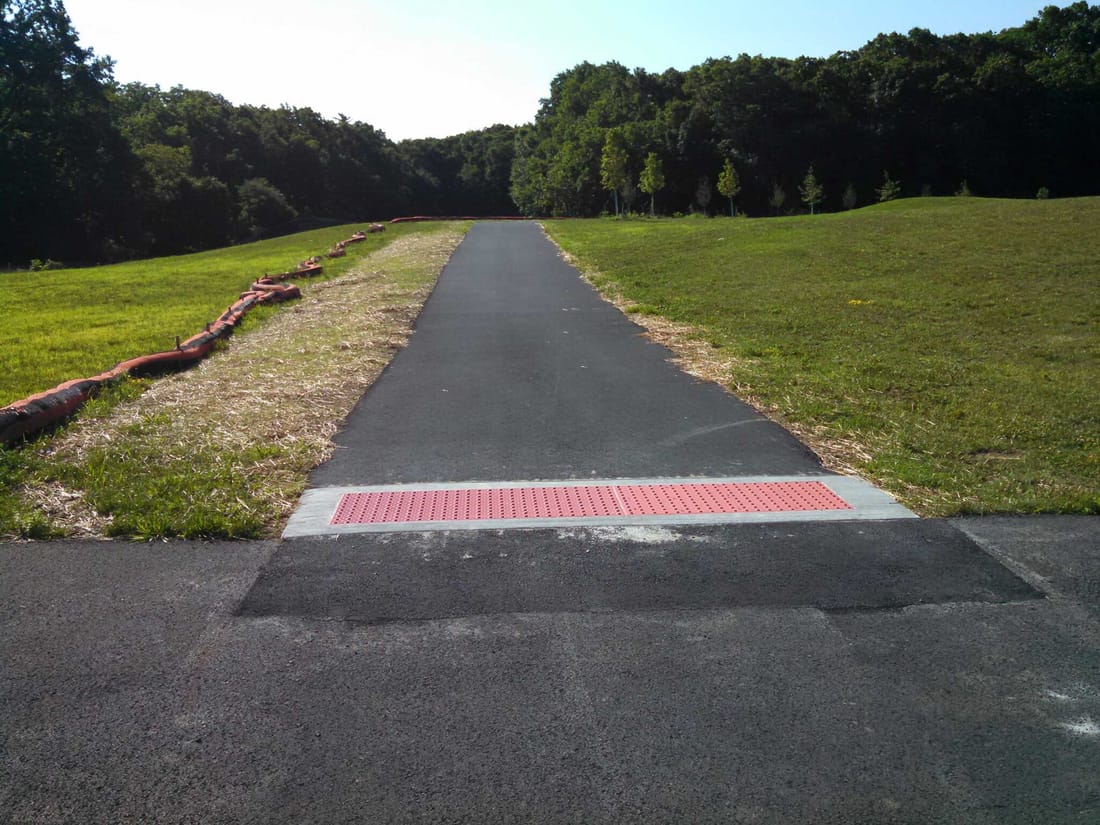
At transitions to existing sidewalks, driveway crossings, and entrances, we match grades and feather the asphalt so there is no abrupt lip. Where Americans with Disabilities Act accessibility is a concern such as at schools, clinics, and public buildings, we pay close attention to slopes and cross slopes to help meet accessibility guidelines.
Cost Drivers for Asphalt Pathway Paving in OKC
Homeowners, property managers, and HOAs in Oklahoma City often ask what drives the cost of asphalt pathway paving. The main factors are route length, required width, base thickness, and how difficult the site is to access.
Straightforward residential walks from a driveway to a front door or around the side of a house are usually the most affordable, because we can quickly prepare the base and place asphalt with minimal handwork. Costs increase when we have to work around mature trees, retaining walls, irrigation systems, or tight backyard gates that limit equipment access.
Base work is another major cost driver. A short walkway over firm, well drained soil near Nichols Hills might only need a moderate base, while a similar length path crossing lower, softer ground near a drainage swale will need more excavation and thicker rock, which adds material and labor.
Asphalt mix type, thickness, and any special design features also affect pricing. Heavier duty mixes for multi-use trails, decorative edges, or integrating concrete pads at benches and intersections all add to the project total. Precision Asphalt Oklahoma City provides itemized estimates so you can see exactly where your money is going and make informed choices about width, route, and specifications.
We also discuss timing and phasing to help manage budget. For large complexes or long trail loops, we can sometimes split the work into phases by section or year, as long as the design accounts for future connections.
Common Problems and How We Prevent Them
Oklahoma City's weather and soils create a predictable set of pathway problems: cracking, edge crumbling, lifting from tree roots, and water-related damage. Precision Asphalt Oklahoma City designs and builds with these issues in mind from the start, so you are less likely to face expensive repairs later.
To combat cracking from expansion and contraction, we focus on consistent base thickness and proper compaction. Thin or poorly compacted spots tend to crack first when summer heat hits or when cold snaps roll through. In areas with known tree root activity, we may adjust path alignment away from trunks, increase base depth, or install root barriers before paving.
Edge failure is common where paths border lawns. Repeated passes with mowers and edgers can break down unsupported asphalt. For higher traffic or high maintenance areas, we can add a narrow concrete or brick edge restraint, or bury additional base rock at the edges to provide better support. Slightly widening the path is sometimes a more effective solution than trying to repair broken edges year after year.
Drainage is another big factor. Standing water after a May thunderstorm will speed up asphalt deterioration. We address this with careful grading, installing small swales or drains where needed, and ensuring paths do not trap runoff against buildings, fences, or neighboring properties. When we tie into existing concrete or older asphalt, we correct low spots when possible instead of simply matching an existing problem grade.
Maintenance, Resurfacing, and Working Around Your Property
A properly built asphalt pathway usually needs minimal care, but some simple maintenance steps can significantly extend its life. We recommend regular sweeping or blowing to remove leaves, dirt, and gravel that can hold moisture against the surface. If small cracks appear over time, timely crack sealing helps keep water out of the base and subgrade.
In Oklahoma City, we often suggest sealcoating for higher traffic walks and trails every few years, particularly at commercial sites and busy HOAs. This helps protect against UV damage from intense summer sun and refreshes the appearance. When an older path or sidewalk has more widespread wear, we can often overlay it with a new asphalt layer instead of removing everything, as long as the base is still sound and slopes can be maintained.
We understand that these projects happen in real spaces where people live, work, and play. At schools and apartments, we schedule pathway work to avoid peak use times and coordinate clear detours and signage. For homes in tight Oklahoma City neighborhoods, we protect landscaping, mark sprinkler heads, and communicate when access to gates or driveways will be temporarily limited.
From a short backyard walkway to a full loop trail around a community pond, Precision Asphalt Oklahoma City approaches each project with the same attention to detail, so your asphalt pathways, sidewalks, and trails stay safe and attractive for years.